
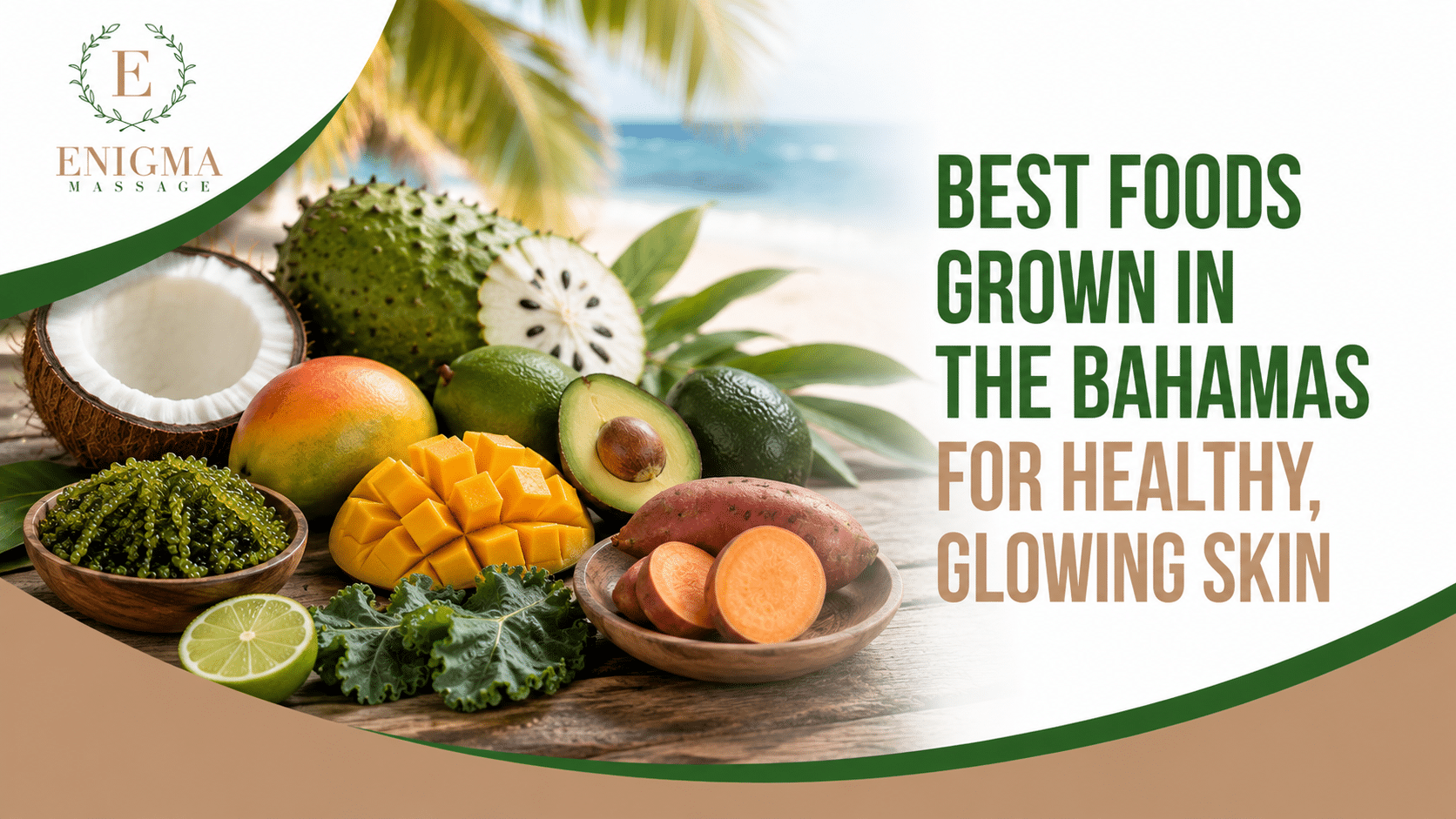
Healthy-looking skin is not created by creams and treatments alone. Daily meals also provide the vitamins, minerals, healthy fats and antioxidants the body uses to maintain normal skin function.
Fortunately, Bahamian farms, backyard gardens and fruit trees produce an impressive variety of nourishing foods. From ripe mangoes and guavas to sweet potatoes and what Bahamians simply call pear, many familiar local ingredients can contribute to a balanced, skin-conscious diet.
These foods are not miracle cures, and no single fruit or vegetable can transform the skin overnight. Their real value comes from enjoying them regularly as part of a varied diet, while also staying hydrated, sleeping well and protecting the skin from excessive sun exposure.
A note for visitors: In The Bahamas, an avocado is commonly called a pear. Ask for pear at a local produce stand or restaurant and you will usually receive the familiar creamy green fruit—not the sweet European pear.
Why Locally Grown Bahamian Foods Deserve Attention
Eating locally is about more than following a wellness trend. Seasonal produce can add freshness, variety and a stronger connection to the islands. It also gives residents and visitors an opportunity to support Bahamian farmers and small growers.
Crops cultivated in The Bahamas include tomatoes, peppers, okra, cabbage, leafy vegetables, squash and other fresh-market produce. Tropical fruit trees found across the islands also provide mangoes, guavas, papayas, soursops, sugar apples and citrus fruit.
Availability varies by island, season and weather conditions, so the freshest choice is often whatever is being harvested locally at the time.
Bahamian-Grown Foods That Can Support Healthy-Looking Skin
1. Pear
Pear is naturally rich in unsaturated fats and provides nutrients such as vitamin E. Dietary fats are important because they help the body absorb fat-soluble vitamins and support normal cell function.
Its smooth texture makes pear easy to add to salads, breakfast dishes, sandwiches and simple island meals. For a balanced plate, enjoy it alongside vegetables and a source of protein rather than treating it as a complete skin remedy by itself.
2. Guava
Guava is one of the most valuable tropical fruits to include in a skin-conscious diet because it contains vitamin C. The body requires vitamin C for normal collagen formation, making fresh fruit a practical way to obtain this nutrient through food.
A ripe guava can be eaten on its own, sliced into a fruit bowl or blended into a drink. When preparing juice, limiting added sugar preserves the fruit’s naturally refreshing character.
3. Mango
Mango season is eagerly anticipated throughout The Bahamas. Beyond its flavour, mango provides vitamin C and carotenoids, including compounds the body can convert into vitamin A.
Vitamin A contributes to the maintenance of normal skin, while the fruit’s antioxidant compounds form part of a varied, nutrient-rich diet. Fresh mango is generally a better everyday choice than heavily sweetened mango drinks or desserts.
4. Papaya
Papaya is soft, naturally sweet and easy to enjoy at breakfast. It provides vitamin C, carotenoids and other plant compounds, while its high water content makes it a refreshing choice in the Bahamian climate.
Try it chilled with lime, added to a fruit bowl or blended into a smoothie without excessive syrups or sweeteners.
5. Soursop
Soursop is known locally for its distinctive fragrance, creamy flesh and slightly tart flavour. The fruit provides vitamin C and can add variety to a diet that might otherwise rely on the same few fruits each week.
It is commonly used in homemade drinks, but the amount of added sugar matters. A lightly sweetened preparation allows the natural flavour to remain the focus.
6. Sugar Apple
Sugar apple, sometimes called sweetsop, is another fruit found in Bahamian yards and gardens. Its segmented flesh contains carbohydrates, vitamin C and minerals, making it a satisfying seasonal snack.
Because it is naturally sweet, a modest serving can satisfy the desire for dessert without needing a heavily processed alternative.
7. Sweet Potato
Sweet potatoes provide beta-carotene, the orange pigment the body can convert into vitamin A. They also contain fibre and work well in meals that need a more filling source of carbohydrates.
Roasting, boiling or baking sweet potatoes keeps the preparation simple. Large amounts of sugar, butter or deep-frying can quickly change the nutritional balance of the dish.
8. Tomatoes
Tomatoes are among the vegetables cultivated by Bahamian growers and are easy to include in everyday meals. They provide vitamin C and lycopene, a naturally occurring plant pigment with antioxidant properties.
Enjoy fresh tomatoes in salads and sandwiches, or cook them into sauces, soups and stews. Pairing cooked tomatoes with a modest amount of healthy fat can help the body absorb lycopene.
9. Leafy Greens
Locally grown leafy vegetables can provide folate, carotenoids and vitamins that support general health. Depending on availability, choices may include lettuce, cabbage, Swiss chard and other garden greens.
Use them as the base of a salad, lightly sauté them or add them to soups. Rotating different vegetables throughout the week offers a broader range of nutrients than relying on one type alone.
10. Pigeon Peas
Pigeon peas are closely connected to Bahamian cooking and are best known as a key ingredient in peas and rice. They provide plant-based protein, fibre and minerals that contribute to a balanced diet.
Protein is particularly important because the body uses amino acids to build and maintain tissues. A sensible portion of pigeon peas, vegetables and minimally processed protein can create a more complete meal.
11. Okra
Okra grows well in warm climates and appears in many Bahamian gardens. It provides fibre, vitamin C and several micronutrients while adding texture to soups, stews and vegetable dishes.
For people who do not enjoy its softer texture, roasting or lightly sautéing okra can produce a firmer result.
12. Goat Pepper and Sweet Pepper
Bahamian goat pepper delivers bold heat, while locally grown sweet peppers offer a milder option. Peppers provide vitamin C and can make nutritious meals more colourful and flavourful without relying heavily on rich sauces.
Goat pepper should be handled carefully, particularly around the eyes and face. A small amount is often enough to transform an entire dish.
13. Citrus Fruit
Limes, sour oranges, grapefruit and other citrus fruits can add vitamin C and bright flavour to local meals. Citrus juice works well over salads, fruit, fish and vegetables, reducing the need for heavier dressings.
Citrus should be eaten or prepared as food—not applied directly to the face. Lime and other citrus juices can irritate the skin and may cause a reaction when exposed to sunlight.
14. Coconut
Coconut water can be a refreshing beverage, while coconut flesh supplies fat, fibre and minerals. Both can fit into a balanced diet when consumed in sensible amounts.
Plain coconut water is different from sweetened coconut beverages, which may contain considerable added sugar. Reading the label is worthwhile when fresh coconut is unavailable.
What About Fresh Bahamian Seafood?
Seafood is harvested rather than grown, but it remains an important part of the Bahamian food story. Fish supplies protein, and some varieties contain beneficial unsaturated fats.
Grilled, baked or steamed fish is generally a lighter choice than heavily battered and fried preparations. The healthiest meal still depends on the full plate, including the vegetables, starches, sauces and serving size.
How to Build a Skin-Conscious Bahamian Plate
A practical meal does not need to be complicated. Start with locally available vegetables, add a sensible serving of protein and choose a fibre-rich carbohydrate such as sweet potato, pigeon peas or another minimally processed option.
A balanced Bahamian-inspired plate might include:
- Grilled fish with tomato, cucumber and leafy salad
- Roasted sweet potato with vegetables and pigeon peas
- Eggs with tomato, sweet pepper and sliced pear
- Fresh papaya, guava or mango with an unsweetened breakfast
- Vegetable soup prepared with okra, pumpkin, tomato and greens
Variety matters more than chasing a single so-called beauty food. Eating several colours of fruit and vegetables across the week provides a wider mixture of nutrients and plant compounds.
Hydration Matters in the Bahamian Climate
Warm weather, outdoor activities and long days at the beach can increase fluid loss. Drinking water regularly is therefore just as important as choosing nourishing foods.
Coconut water, fresh fruit and water-rich vegetables can contribute to fluid intake, but plain drinking water should remain the foundation. Excess alcohol and heavily sweetened drinks can also work against an otherwise thoughtful wellness routine.
Healthy Skin Requires More Than Food
Nutrition is only one part of caring for the skin. Consistent sun protection, adequate rest, regular movement, gentle cleansing and professional guidance when skin problems arise are equally important.
Visitors planning relaxing holidays in The Bahamas should be especially mindful of the tropical sun. Shade, protective clothing and broad-spectrum sunscreen are essential, even on breezy or cloudy days.
Travellers comparing Bahamas resorts can also look beyond pools and restaurants. Access to restful surroundings, nutritious meals, spa amenities and quiet time can make a vacation feel genuinely restorative.
Complete Your Wellness Routine in Nassau
Good food nourishes the body from within, while thoughtful self-care creates time to slow down and reset. At Enigma Massage, our professional facials are designed to complement a well-rounded skincare routine in a calm, welcoming setting.
Massage can also provide a peaceful break from packed itineraries and long travel days. Discover the hidden benefits of getting a massage while on vacation in Nassau and learn why many visitors make relaxation part of their island experience.
Enjoy What Grows Close to Home
The best foods for healthy-looking skin are not necessarily expensive imports or fashionable supplements. They may already be growing in a Bahamian backyard, displayed at a roadside stand or served in a simple home-cooked meal.
Pear, guava, mango, papaya, sweet potato, pigeon peas, tomatoes and leafy vegetables each offer something different. Enjoying them as part of a varied diet is a realistic and distinctly Bahamian way to support overall wellness—and healthy skin along with it.
Disclaimer: This article provides general wellness information and is not a substitute for medical or nutritional advice. Anyone experiencing persistent irritation, acne, rashes or other skin concerns should consult a qualified healthcare or skincare professional.